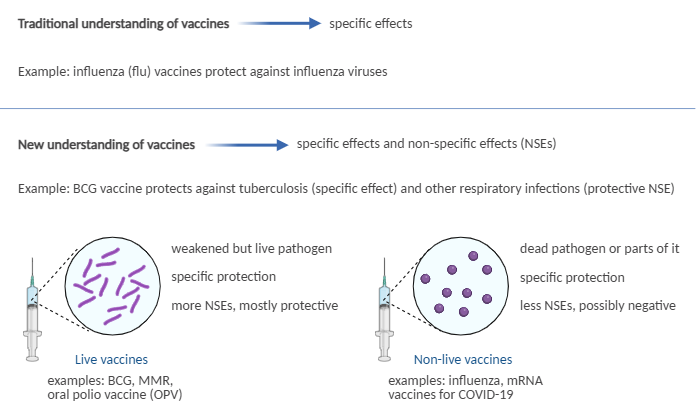
Non-specific effects (NSEs) are the general effects a vaccine has on the immune system, which influence how the immune system responds to future infections or vaccines. NSEs can already occur within days of vaccination and persist for several months, sometimes even years, or until a new type of vaccine is given.
Discovery of NSEs
In the late 1980s and early 90s, researchers of the Bandim Health Project in Guinea-Bissau, led by Prof. Peter Aaby, observed that some vaccines given to children impacted overall mortality (death) beyond their effect on the specific disease target. The first publication in 1984 reported reduced child mortality after measles vaccination. In a region like Guinea-Bissau with very high child mortality rates, this striking observation informed the team’s work and sparked further investigations into how vaccines might influence the immune system in broader, unforeseen ways.
Live vs non-live vaccines
Live vaccines like Bacille Calmette-Guérin (BCG) and measles often provide broader protection against various infections, not just their specific targets. The immune system is “trained” by these vaccines and can respond better to upcoming infections. In contrast, some non-live vaccines, such as Diphtheria, Tetanus, and Pertussis (DTP), are linked to increased overall mortality in some settings. These differences suggest that the type of vaccine can influence the immune system’s general responsiveness.
Sex differences in NSEs
Studies indicate that males and females respond differently to vaccines, mainly due to the existing sex differences in their immune systems caused by genetic differences and hormones. This is true for specific effects as well as NSEs. For example, the DTP vaccine is associated with increased mortality in girls but not in boys. Such findings highlight the importance of considering sex-specific responses in vaccine research and public vaccination programs.
Importance of the vaccination order
The sequence of vaccine administration can significantly influence their NSEs. Research indicates that if live vaccines, such as BCG or measles, are given after non-live vaccines like DTP, they may prevent the potential negative NSEs associated with the non-live vaccine. Thus, administering a live vaccine after a non-live one can enhance overall immune protection. Optimizing the order of vaccinations should be considered to maximize health benefits and reduce unintended adverse effects.
Acceptance of NSEs in practice and policy
While evidence for NSEs has grown in the past decades, integrating this knowledge into vaccine policies remains challenging. Organizations like the World Health Organization (WHO) acknowledge the potential significance of NSEs but call for more rigorous research before making policy changes. NSEs are still not considered when testing new vaccines or deciding vaccination schedules. The complexity and variability of NSEs make them challenging to incorporate into standardized guidelines.
How can we use the knowledge of NSEs?
Understanding NSEs can inform vaccine schedules to maximize overall health benefits. For example, administering well-studied live vaccines like BCG early in life might enhance general immunity. While testing new vaccines, their effects on other infections could be monitored. Recognizing NSEs can also lead to targeted vaccination strategies considering factors like age, sex, local disease patterns, and other recommended vaccinations. Optimizing both the specific effects and NSEs would ultimately improve public health outcomes.
Further resources
Podcast with Prof. Peter Aaby on the discovery of NSEs
Podcast with Prof. Mihai Netea on trained immunity (the molecular mechanism behind NSEs)
TEDx talk by Prof. Christine Stabell Benn on NSEs